Digital Inclusion stories
Developing nations risk costly dependence unless they share AI infrastructure, cybersecurity entrepreneur Kunal Panchamia told a Geneva forum.
The move could help governments link identity to welfare, health and tax services, broadening access across digital public infrastructure projects.
The extra cash will widen internet access, digital skills training and job pathways for underserved communities across Equinix's global footprint.
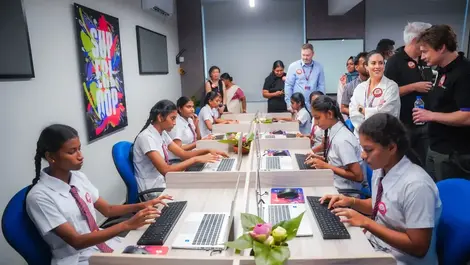
The new facility will give girls at a Colombo school better access to laptops, STEM lessons and hands-on digital learning.
Regional mobile services generated USD $1 trillion in economic value in 2025, but growth now hinges on AI, trust, resilience and sovereignty.
The Wellington consultancy is strengthening oversight as clients demand safer AI, cyber and digital change advice across public and private sectors.
Skills shortages in Canberra's cyber sector are being tackled through awards for women, mentors and employers boosting inclusion.
Victims are being left to fend for themselves as fraud becomes industrialised, with many still blaming themselves after scams.
Regional households could save up to AUD $170 as a limited-time deal cuts the first six months of eligible broadband bills.
Slow broadband could now rule out a property for nearly a quarter of home movers, as internet access becomes a key deciding factor.
Customers in remote parts of New Zealand may soon get voice, data and messaging on ordinary smartphones, after tests using AST SpaceMobile's network.
Blind and low-vision customers will be able to complete routine banking tasks by video call without visiting a branch, as NatWest tests the service.
Eligible workers will continue to get fully funded training in five digital courses as the West Midlands tackles a 280,000-person skills gap.
More than 5,500 attendees at ASAE's Indianapolis meeting could follow sessions in their own language or via captions without extra kit.
Coverage of MeshCore activity will widen in South Australia as new observer nodes in Port Lincoln and the Adelaide Hills come online.
More than 550,000 people in hardship have already received free mobile data as the renewed scheme seeks to connect 500,000 low-income households.
A third of young New Zealanders have sought personal advice from AI, highlighting a trust gap that Netsafe hopes to tackle with its new programme.
Early momentum is prompting a broader push to bring more Canadians into open source, with 31,000 visits and 1,181 library entries.
New Zealand's tech growth is being constrained by a deepening talent shortage, with firms struggling to fill AI, cyber and cloud roles.
CAD $90,000 scam losses have pushed Teqare to widen training across more than 80 First Nations, schools and elder communities in Canada.