

SITA says digital tools are reshaping airport growth
Tue, 7th Jul 2026
Aviation is relying more heavily on software, biometrics and AI as it prepares for passenger traffic to rise toward 10 billion a year by 2050, according to SITA, which says the sector is trying to expand capacity without matching growth in terminals, aircraft fleets and border staffing.
In its Impact Report 2025, the air transport technology supplier set out how airlines, airports, governments and border agencies are using digital systems to manage growth, disruption and environmental pressures. The report says the industry is on track to carry 8 billion passengers a year within 20 to 25 years, with longer-term growth pushing toward 10 billion annually.
That growth challenge is shaping investment priorities across airport operations, border processing, baggage handling and air traffic resilience. SITA argues that the response is increasingly based on software and operational systems rather than physical expansion alone.
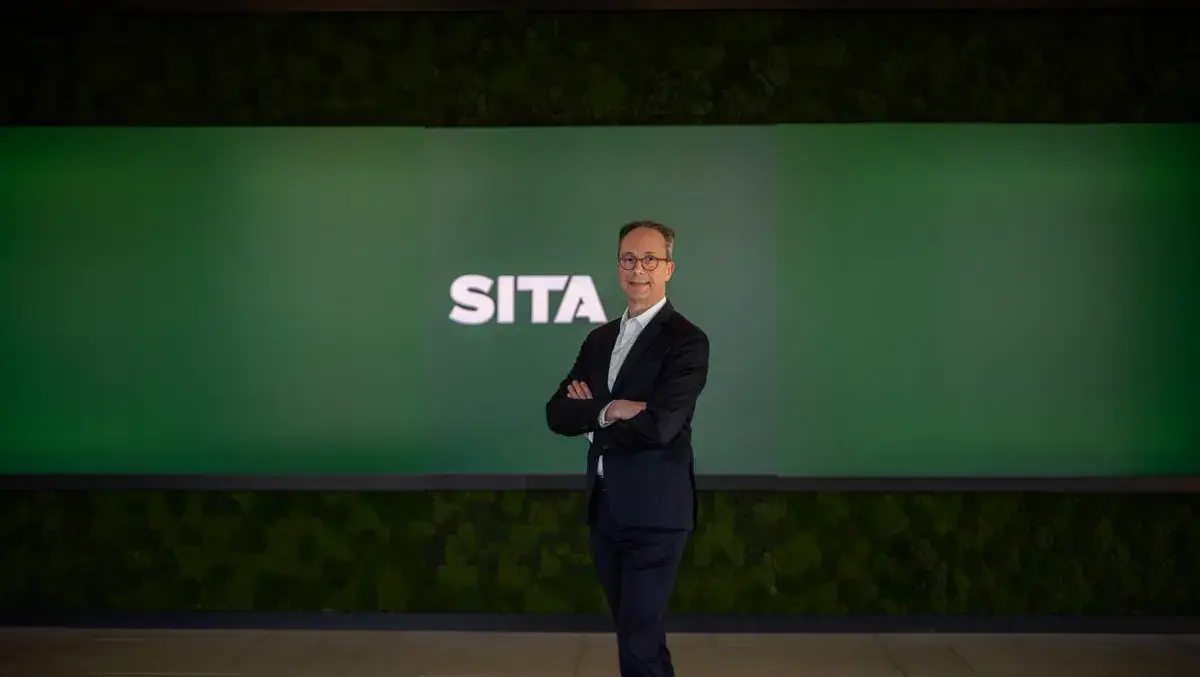
"With passenger numbers heading toward 10 billion a year by 2050, the question is unavoidable: how do we move twice as many travelers without doubling our infrastructure? The SITA Impact Report 2025 shows how that shift is already underway. Airports are scaling capacity within the buildings they already have, avoiding the cost and timelines of new construction. Governments are clearing borders before passengers ever reach a queue or an officer's booth. AI is moving out of pilot programs and into the operations rooms where flights are run. None of this is one company's achievement. It is a shared tech transformation, where airlines, airports, governments, and partners are powering the future of air transport together," said David Lavorel, Chief Executive Officer, SITA.
Border checks
One of the clearest examples in the report is border processing. SITA said Aruba has reduced border clearance times for pre-cleared passengers to as little as eight seconds on arrival by combining digital travel credentials with biometric checks. It said that represented a 78% improvement on previous processing times.
The company also said more than 271 million travellers a year now receive a SITA-supported risk assessment before arrival, with most assessments completed in under four seconds. That model shifts more screening and decision-making earlier in the travel process, before a passenger reaches an airport checkpoint or arrival hall.
For airports and border agencies, that approach is intended to reduce congestion and improve throughput without requiring equivalent investment in additional physical processing space. It also reflects a broader industry move toward pre-clearance, digital identity verification and greater use of biometric data in international travel.
AI in use
SITA's report also points to AI moving into live operational environments across both airline and airport systems. It said SITA OptiFlight, which uses machine learning and digital twin modelling to recommend fuel-efficient climb and cruise profiles, processed 2.9 million flights in 2025 for 59 airline customers.
According to the company, that contributed to fuel savings of 127,732 tonnes and carbon dioxide reductions equivalent to 403,633 tonnes. The system is part of a wider push by airlines to use flight operations software to cut fuel burn and improve efficiency in day-to-day flying rather than through fleet renewal alone.
SITA also highlighted airport operations platforms at Toronto Pearson and Abu Dhabi Airports, where AI-driven Total Airport Management tools are being used to recover minutes during aircraft turnarounds. Those gains can then flow through later flights and reduce operational bottlenecks across the day.
At Thai Airways, SITA said its WorldTracer Auto Reflight system uses AI-driven routing to automatically rebook mishandled baggage onto the next available flight. The company said that reduced reconciliation time from three minutes to one second.
Network resilience
The report also focused on how the same digital systems are being used to manage disruption when networks come under strain. In a 2025 proof of concept at France's Reims Control Centre, SITA said air navigation service provider DSNA gave air traffic controllers the same live weather view already used by pilots and dispatchers.
According to SITA, that reduced weather-driven delays by up to 65% and saved up to 105,000 delay minutes over 21 days of weather-affected operations. The test points to growing interest in shared operational data across air traffic control, flight operations and airport management.
SITA also referred to the CrowdStrike outage in July 2024, which disrupted airline systems globally. It said more than 460 flights continued operating on SITA Maestro DCS during that incident. The company added that during Hajj 2025, its operational support and automated incident management systems kept airline and airport systems running with zero downtime and zero major incidents.
Bags and buildout
Outside flight and border operations, SITA said baggage tracking and common-use airport systems remain another major area of technology investment. It said airlines participating in its baggage tracking partnership with Apple, now also joined by Google, saw the number of truly lost bags fall by 90% for luggage equipped with an Apple AirTag when location sharing was used through SITA WorldTracer.
The report also pointed to Frankfurt Airport's Terminal 3, which is designed to handle up to 19 million passengers a year in its initial phase. SITA said the terminal was delivered around a digital-first common-use design developed with CCM, the airport interior design business it acquired.
SITA said revenue rose 7% to USD $1.71 billion in 2025, marking a fourth consecutive year of growth in the 7% to 8% range. It said that growth supported research and development spending, the acquisition of CCM, and co-innovation work with more than 30 customers through SITA Labs. On sustainability, SITA said it cut emissions by 1.3% year on year, taking total reductions to 32% against a 2019 base year, while sourcing 90% renewable electricity across its offices worldwide.