Defense stories
The round values the sovereign AI start-up at USD $1.5 billion as it seeks funding for research and compute to expand across key sectors.
Adoption of dedicated LTE and 5G systems is accelerating, with manufacturing still dominant and 5G now taking more than half of new projects.
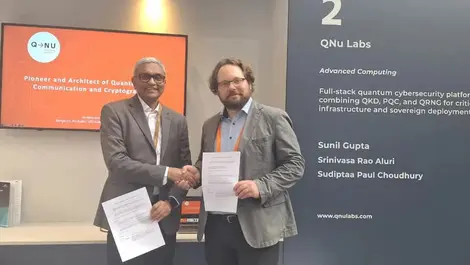
The partnerships aim to help banks and critical infrastructure prepare for quantum-era cyber risks as QNu Labs expands in Europe.
Initial full-wafer graphene runs have brought Archer closer to repeatable qubit production, with a working device still due by Q3 2026.
Rising AI costs and weaker oversight are pushing enterprises to demand tighter controls as token use spreads across clouds and in-house models.
The deal values the Finnish satellite intelligence group at more than EUR 10 billion as governments step up demand for sovereign space systems.
Law enforcement teams may cut review time as the platform tackles noisy, multilingual recordings and flags relevant evidence from $50.
Closer cooperation in artificial intelligence, health and defence follows Canada-Ireland talks as bilateral trade reached $6 billion last year.
Electrified vehicles, factory automation and renewable projects are expected to lift demand for organised wiring assemblies to USD $173.9 billion by 2036.
Two-thirds of aerospace decision-makers now question whether Europe can turn space expertise into industrial output fast enough to compete globally.
More than 15,000 Ventia field workers could gain AI tools to cut admin and speed decisions as the services group tests OpenAI pilots.
The North East's cyber profile gets a boost as the first regional Cyber Leader Summit arrives in Newcastle this autumn.
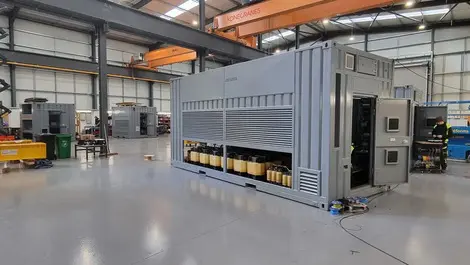
The new local base aims to speed up commissioning and maintenance support as demand for load testing rises across Australia's data centre boom.
The Sheffield cybersecurity firm gains global visibility and policy access as concerns rise over quantum-era attacks on critical networks.
The listing gives Antevia a quicker route into tightly controlled UK supply chains, easing procurement for its private 5G network offering.
After a season of racing and retraining, the software's forecasts were shown to be far more reliable, even in severe offshore conditions.
Most UK public sector IT teams lack the infrastructure and trust needed to scale AI safely, a SolarWinds survey found.
UK banks, defence contractors and telecoms groups are backing a homegrown AI model designed to run inside customers' own systems.
Delayed procurement is making revenue visibility harder for UK innovation firms, even as 56 per cent plan their next growth phase at home.
UK businesses struggling to push AI pilots into production will get onshore support from a merged consultancy focused on delivery, quality and security.