Industry 4.0 stories
Users in manufacturing and defence will get faster deployment of rugged edge devices as Panasonic bundles Red Hat software on TOUGHBOOKs.
Industrial operators could cut downtime and maintenance costs as AVEVA gains analyst backing for asset performance software.
The move gives the manufacturing group a role in shaping an open-source framework aimed at helping factories scale digital change beyond pilot projects.
The tie-up aims to speed plant design and operations, as the firms target chemical and biomanufacturing tasks that often take months to model.
Researchers could cut the time and cost of early quantum experiments as Haiqu's new platform already runs on current hardware.
Its research aims to show developers why deterministic software is becoming crucial as AI robots move into shared, safety-critical spaces.
Enterprises running AI across multiple sites may cut latency and costs as the partners link cloud, edge hardware and Kubernetes management.
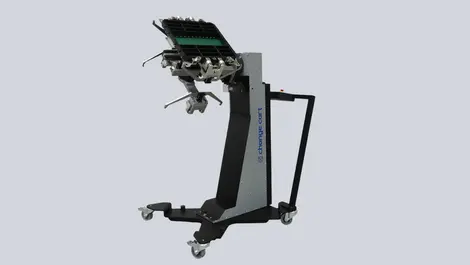
Semiconductor test floors could cut board-change downtime and damage risk as the system lets one operator swap boards in under a minute.
Manufacturers could halve CPQ product-modelling work as staff race to digitise complex catalogues amid a shortage of specialist engineers.
Manufacturers and distributors can now cut integration headaches as Syspro’s new marketplace bundles partner software around its ERP platform.
Customers in healthcare, education and venues can add Wi-Fi 7 capacity without major power or switching upgrades, Extreme said.
Manufacturers could gain tighter software integration and AI-driven oversight as ECI expands its North American and Australian portfolio.
The robotics firm is targeting faster automation for factories as it opens its US headquarters and rolls out a manufacturing AI model.
Orders and shipments can now be rebooked in minutes as Infios pushes AI deeper into live logistics systems amid persistent disruption.
Australian batch manufacturers gain single-system control of finance, quality and traceability as ECI rolls out Deacom ERP amid labour and supply pressure.
Skills shortages are now the biggest obstacle as predictive maintenance adoption in UK factories climbs from 9% to 22%.
Customers in mining, energy and transport gain a single supplier for private networks as BAI folds Titan ICT into its national operations.
Rising demand for warehouse software is boosting Infios, which has again been ranked by Gartner as a Leader and Customers' Choice.
Customers can now monitor transport and warehouse activity in real time as rising costs and disruption push firms to unify supply chain data.
Avoiding costly crashes and scrap, manufacturers are using live machine data to test CNC jobs virtually before a single cut is made.















.webp)