

DroneShield & Origin Robotics team up on counter-UAS
Tue, 31st Mar 2026
DroneShield has signed a memorandum of understanding with Origin Robotics to collaborate on defence and security projects focused on counter-unmanned aircraft systems.
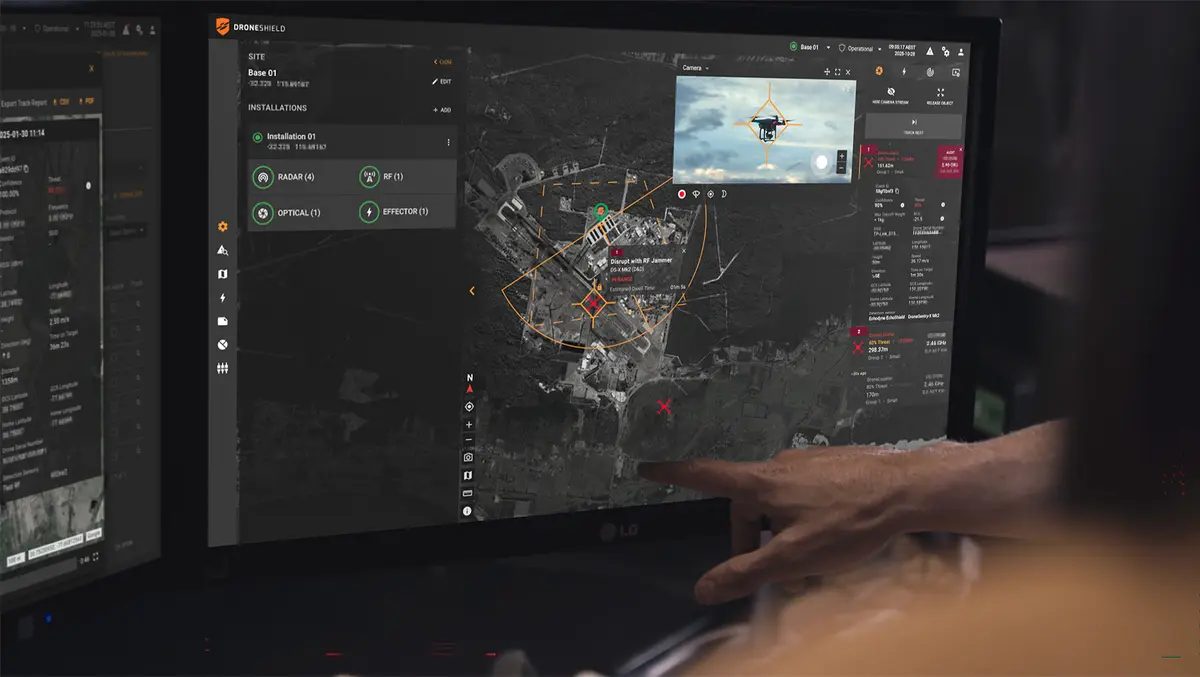
The agreement establishes a framework for joint projects targeting emerging counter-UAS requirements. It combines DroneShield's drone detection, electronic warfare, sensor fusion and command-and-control systems with Origin Robotics' autonomous interceptor platforms.
The deal reflects a broader shift in air defence as militaries seek lower-cost ways to counter the spread of long-range one-way attack drones, including Shahed-type systems. Interceptor drones are increasingly being considered as one layer in wider counter-UAS networks, alongside sensors, tracking tools and other effectors.
According to the companies, Origin Robotics' BLAZE interceptor has been selected by several European governments and is entering operational service. DroneShield's SensorFusionAI and DroneSentry-C2 products would form part of the proposed integration with Origin's systems.
Threat shift
Counter-drone systems have risen up defence procurement agendas in Europe, the Middle East and the United States as armed forces respond to a surge in the battlefield use of cheaper unmanned aircraft. The war in Ukraine has accelerated that shift, with both attack and countermeasure technologies adapting rapidly.
That has increased interest in systems that can quickly track small aircraft and respond without relying solely on more expensive traditional air defence weapons. In that context, interceptor drones have gained attention as a potential response to threats that fall between electronic warfare measures and missile-based defences.
Companies
DroneShield, based in Australia, supplies counter-drone systems to military, government, law enforcement and critical infrastructure customers. Riga-based Origin Robotics develops autonomous unmanned aerial weapons systems and was founded after the invasion of Ukraine.
Its loitering system, BEAK, is in use with the Latvian and Ukrainian armed forces, while BLAZE is designed as a man-portable counter-UAV interceptor. The proposed combination would link DroneShield's detection and tracking data with Origin's intercept platform.
Strategic fit
For DroneShield, the agreement adds a kinetic interception element to a portfolio focused heavily on detection and electronic attack. For Origin Robotics, it provides access to an established counter-drone supplier with products already marketed across multiple regions.
The memorandum does not include financial terms. Instead, it provides a formal basis for the two companies to work together on projects as demand grows for layered counter-UAS systems.
Executive view
DroneShield Chief Product Officer Angus Bean described the pressure facing operators as drone threats evolve. "Counter-UAS has entered a phase where accuracy, speed and scalability are non-negotiable. Our sensor fusion capability delivers world-leading quality track data and allows operators to continuously strengthen drone detection. By partnering with Origin, we are creating a pathway that directly addresses the need to defeat Shahed-type threats, providing operators with a mature, affordable and operationally credible approach as part of a truly layered sensor and effector solution," said Bean.
Origin Robotics linked the partnership to changes in the economics and pace of modern conflict. "Our autonomous interceptor platforms are built for the realities of modern conflict, where traditional systems can struggle to respond quickly or cost-effectively. Partnering with DroneShield allows us to combine best-in-class detection with real-time interception, creating a more responsive and scalable approach to counter-UAS operations," said Agris Kipurs, CEO, Origin Robotics.