

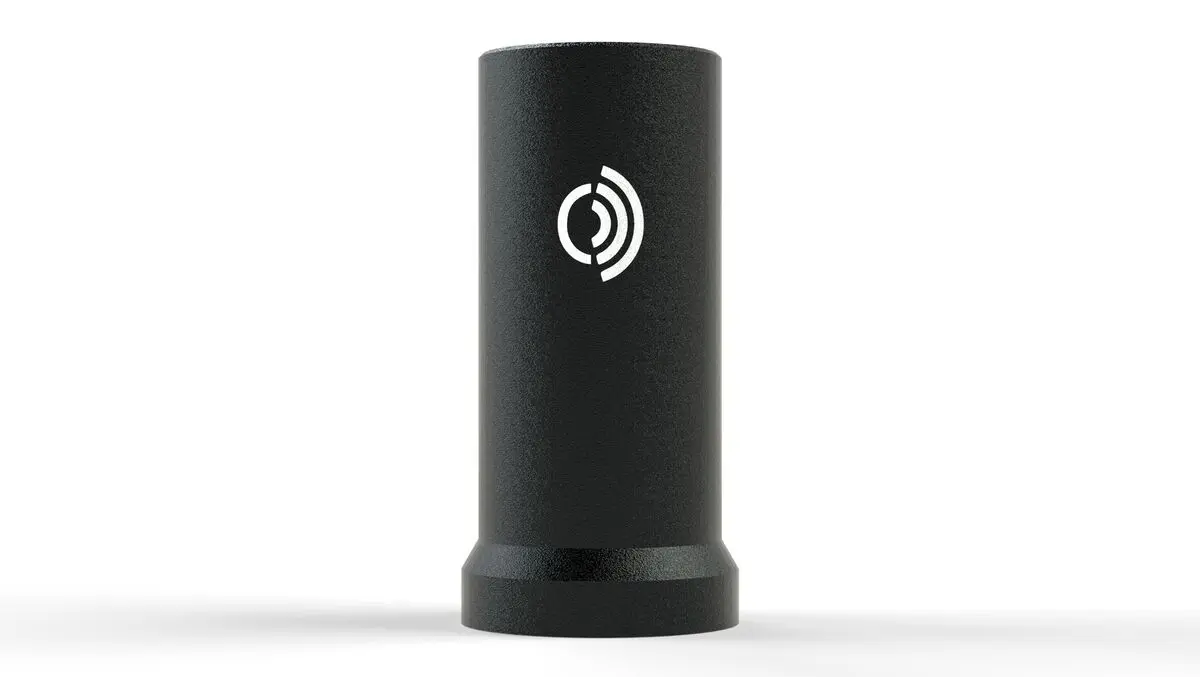
Notch launches steerable drone antennas to boost range
Mon, 18th May 2026
Notch has launched its MAGIC Series of adaptive antennas for drones and wireless platforms, designed to replace omnidirectional antennas with steerable alternatives.
The Cambridge, Massachusetts-based company is introducing two products: MAGIC WIZARD and MAGIC ELF. They are aimed at ground stations, vehicles, fixed installations and smaller drone platforms, and are designed to work with existing radios and standard radio-frequency interfaces. That allows users to upgrade the antenna without changing the radio itself.
The launch addresses a long-standing constraint in wireless links for drones and other mobile systems. Omnidirectional antennas remain widely used because they are simple, established and relatively inexpensive, but they radiate signal in every direction, including where it is not needed.
That reduces efficiency in crowded spectrum environments, over longer distances and in areas with significant interference. Notch's new systems instead direct radio-frequency energy where it is needed rather than dispersing it across the surrounding area.
How it works
The antennas use electronically reconfigurable metamaterial structures to shape and steer radio-frequency energy across 360 degrees of azimuth coverage without moving parts. Notch presents this as a way to deliver some of the benefits of directional links without the size, weight, power consumption and cost of conventional phased-array systems.
In its current configuration, MAGIC WIZARD weighs about 700 grams and draws less than 600 mW. According to Notch, it can deliver more than twice the effective range of a standard omnidirectional antenna.
MAGIC ELF, the smaller model, weighs about 250 grams and is aimed at drone platforms with tighter payload limits. It is intended for operators seeking stronger link performance without a heavier radio-frequency upgrade.
The products reflect a broader effort to shift antennas from fixed hardware to systems that can be updated over time through software. That would place the antenna more firmly within the software-defined wireless stack rather than treating it as a passive edge component.
Shahriar Khushrushahi, founder and chief executive officer of Notch, said the company sees antennas as an underdeveloped part of wireless infrastructure.
"We've spent decades optimizing radios, but the antenna, the first point of contact with the RF environment, has remained mostly static hardware. We are turning it into a software-defined system that can be configured, updated, and improved over time," Khushrushahi said.
Product roadmap
Initial MAGIC configurations are available now, according to the company. Notch is also working on broader ISM-band coverage across the product line and developing a lighter WIZARD-class variant for Group 1 UAV applications where payload weight is tightly constrained.
The MAGIC launch is part of a wider product roadmap built around software-defined metamaterials. The company is also preparing related systems including GShield, described as a conformal GPS anti-jam retrofit for unmanned aircraft, and masterBLASTER, a lower-cost anti-jam system for UAV, UGV and USV platforms.
The planned products suggest Notch is seeking to apply the same underlying approach beyond communications links and into anti-jamming and navigation resilience. One of them, GShield, has already been tested on a major defence manufacturer's platform, according to the company.
The market backdrop for the launch is a rapid increase in drone use alongside rising congestion in wireless spectrum. Operators are looking for ways to extend range and maintain stable links without redesigning entire radio systems, particularly on platforms where space, power draw and weight are tightly limited.
For drone makers and wireless system providers, that makes antenna design more consequential than it has often been treated. Notch argues that improvements in radio hardware alone are no longer enough when link reliability also depends on how efficiently energy is directed through the antenna layer.