Emergency services stories
Businesses are racing to adopt Generative AI, promising efficiency and competitive edge, but grappling with risks such as inaccuracy and cybersecurity.
A SOTI report unveils major IT vulnerabilities in Australia's emergency services, raising alarms after CrowdStrike's global outage affected 8.5 million devices.
It comes after a major IT outage linked to a Windows security update stopped essential services around the world, causing significant disruption.
One NZ, previously Vodafone NZ, appoints Kieran Byrne as CTO after Tony Baird's 14-year tenure. Byrne to lead networks, cybersecurity, and IT operations.
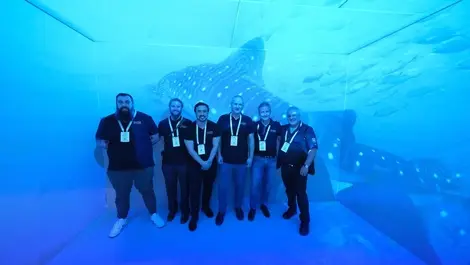
Fujifilm and Igloo Vision will unveil a cutting-edge 360 booth at Integrate 2024, using Fujifilm's FP-Z6000 Projectors to deliver immersive experiences from Aug 21-23 in Sydney.
A new partnership, Ghost is for All, aims to transform New Zealand's digital services, focusing on accessibility for 1.1 million disabled citizens.
Purple Transform secures Innovate UK funding to develop an AI platform designed to reduce incidents at level crossings and enhance rail safety.
FUJIFILM Australia and Igloo Vision are set to debut a cutting-edge immersive 360 booth at EduTech 2024 in Melbourne, defining the future of educational tech.
CrowdStrike's Falcon sensor causes global Windows BSOD, hitting emergency, banking, and aviation sectors.
A faulty update from Crowdstrike has triggered a global IT outage, disrupting healthcare, broadcasting, and more, raising urgent questions about security dependencies.
Aquila clinches AUD $2 million in follow-on funding led by Alua Group to accelerate Lightway Sentry's development.
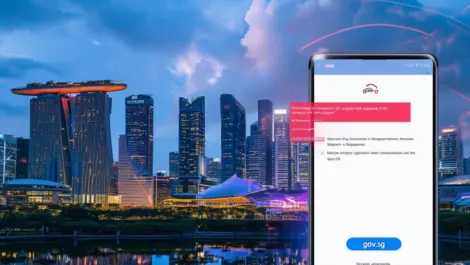
Singapore will introduce a unified SMS Sender ID, gov.sg, for all government messages by 1 July 2024, to enhance communication security and public trust.
Manchester's Sync wins spot on HeathTrust Europe's £6 billion ICT Solutions Framework, joining 10 other suppliers to deliver digital solutions.
Singapore amends Cyber Security Bill to mandate supply chain security disclosures for CII operators. Organisations struggle with rising security breaches despite bans on shared app use.
A study finds UK emergency services suffer frequent communication outages due to limited technology diversity, highlighting the need for mixed communication systems.
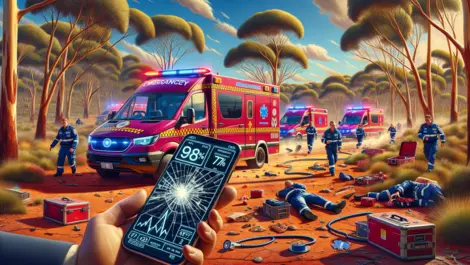
A SOTI report reveals that outdated technology within Australia's emergency services is seriously hampering response rates, with 97% experiencing mobile device failures.
WorkSafe has dropped charges after Mercury NZ pledged NZD $1.15 million to safer plant inspections and geothermal risk controls.
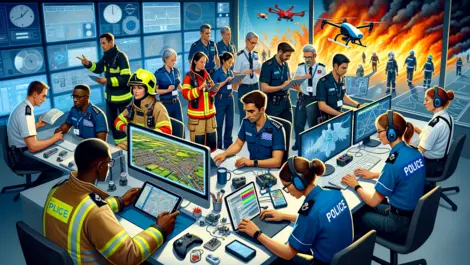
Advanced drone technology facilitates safer bushfire monitoring across Western NSW in a landmark trial, proving critical in both early detection and rapid response.
1,500 5G-enabled drones commanded a magical spectacle over Marina Bay, heralding a revolution in drone technology offering limitless smart solutions.
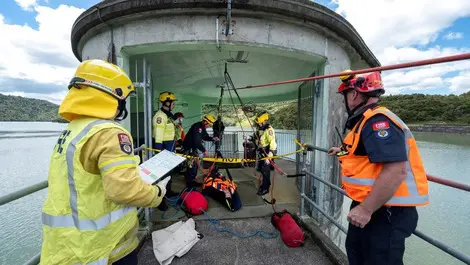
The drill exposed gaps in Watercare’s rescue plans and could improve real-world response times at remote sites.