

AMD expands EPYC chips for edge, telco and storage workloads
Wed, 20th May 2026
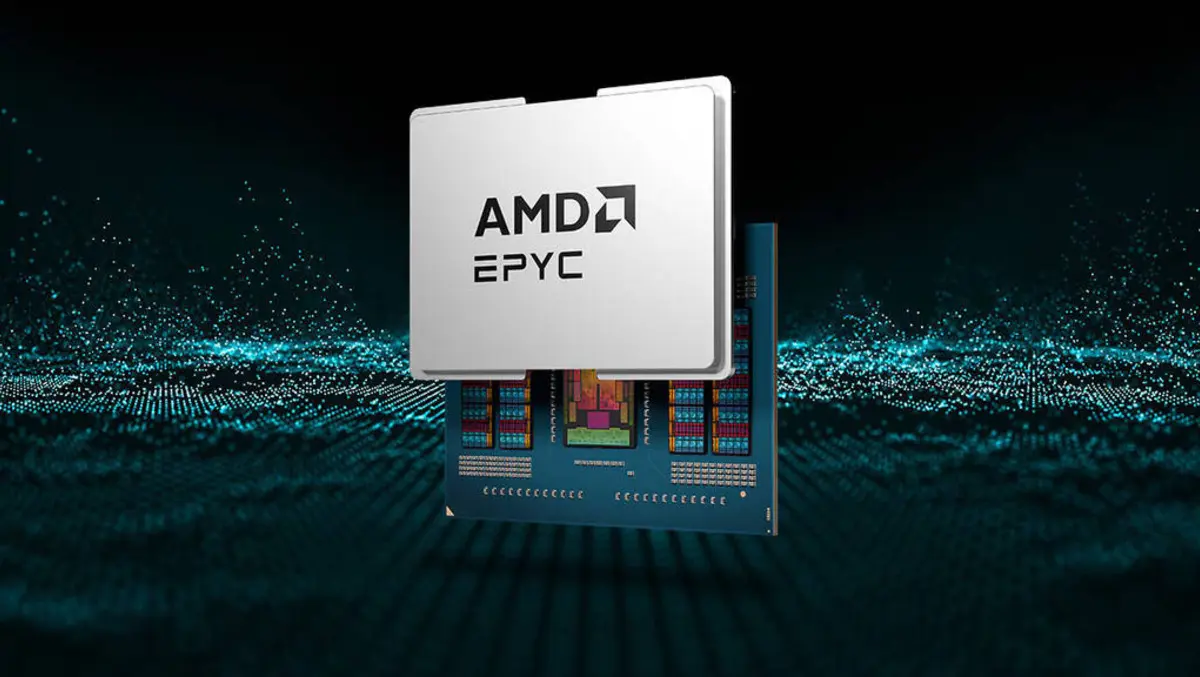
AMD has launched its EPYC 8005 server processor range, aimed at edge, telecoms and cloud storage deployments.
The line-up spans eight to 84 cores in a single-socket design, with thermal design power from 70 watts to 225 watts. Based on AMD's Zen 5 architecture, the processors are intended for environments where space, power and cooling are constrained.
The launch expands AMD's server portfolio with a range positioned below its EPYC 9005 processors for mainstream data centre use. The new products instead target compact systems in areas such as retail, virtual radio access networks and dense storage nodes.
At the top of the range, the 84-core EPYC 8635P delivers 40% higher integer performance than the previous-generation 64-core EPYC 8534P, based on published SPECrate2017_int_base scores cited by AMD. The company also said the chip offers 9.5% higher performance per watt than the earlier part, according to SPECpower_ssj2008 results.
Against Intel's 40-core Xeon 6716P-B in the same class, AMD said the EPYC 8635P provides 91% higher integer performance while operating at 225 watts versus 235 watts. It also compared the processor with Intel's 72-core Xeon 6776P-B and Nvidia's Grace CPU Superchip on performance per watt using SPECpower_ssj2008 data.
AMD is pitching the chips as a way for operators to consolidate workloads onto fewer servers. The processors support DDR5 memory, PCIe Gen 5 connectivity and x86 compatibility, including AVX-512, which should allow software to move between cloud and edge systems without code changes, according to the company.
Telco focus
A major part of the launch centres on telecoms workloads, particularly virtual RAN systems that shift more network functions into software running on standard servers. The EPYC 8005 range includes optimisations for Layer 1 processing, including support for low-density parity-check workloads used in 5G networks, AMD said.
Samsung has tested its multi-cell vRAN software on a single server using an 84-core EPYC 8635P, according to figures supplied by the companies. That setup supported 54 cell networks with downlink throughput of 9.5 Gb/s and uplink throughput of 2.0 Gb/s, AMD said.
"By combining AMD's processing technology with Samsung's commercially proven vRAN software, we are accelerating the industry's transition to AI-ready, cloud-native networks. This powerful combination delivers the performance, flexibility, and scalability operators need to evolve toward fully software-driven infrastructures," said Michael Kim, vice president and head of vRAN software R&D group networks business at Samsung Electronics.
Retail AI
AMD also used the launch to highlight edge AI use cases in physical retail. Smaller AI models and lower inference costs are making it more practical to run computer vision and analytics applications inside individual stores rather than sending workloads to central cloud systems, the company said.
WobotAI is using the processors for video analysis systems running on in-store servers. Its software uses existing camera infrastructure to monitor store conditions and generate tasks and other operational information for staff, according to the company.
"With AMD EPYC 8005 Server CPUs, our platform runs entirely at the edge-delivering high performance in a small footprint. That means less reliance on GPUs and the cloud-just efficient, cost-effective TCO and scalable AI running directly where the data is generated," said Will Kelso, president of WobotAI.
Storage economics
Cloud storage is another target market. Storage operators need processors that leave enough budget, power and physical room for solid-state drives and networking while still handling metadata, caching and software-defined storage workloads, AMD said.
Single-socket servers using the EPYC 8635P delivered about 1.23 times the CephFS RADOS throughput of systems based on the previous-generation EPYC 8534P in testing cited from the Phoronix Test Suite, according to AMD. Those results covered throughput, operations and latency across nine benchmark tests.
In hardware terms, the EPYC 8005 range supports up to 96 PCIe Gen 5 lanes, six channels of DDR5-6400 ECC memory and up to 3 TB of memory capacity. The processors are also designed to support wide thermal operating ranges and systems that can meet network equipment building system requirements for telecoms and outdoor deployments, AMD said.
The launch comes as chipmakers compete for a growing market in compact servers handling AI inference, telecoms software and data processing outside centralised data centres. AMD's argument is that more of those workloads can now be handled by a single-socket x86 server with up to 84 cores and a top power envelope of 225 watts.