

Exclusive: Castrol puts data centre experts behind CORE
Thu, 1st Oct 2026
Castrol has launched a design and lifecycle services offer for data centre cooling, drawing on IT and data centre specialists to help customers plan, deploy and maintain liquid cooling for AI infrastructure.
Industry roots
Launched in Singapore on 29 September, Castrol CORE combines coolant with design, system integration, testing and maintenance through hardware and service partners. Castrol established its data centre and thermal management division three years ago amid rising demand to cool high-density servers.
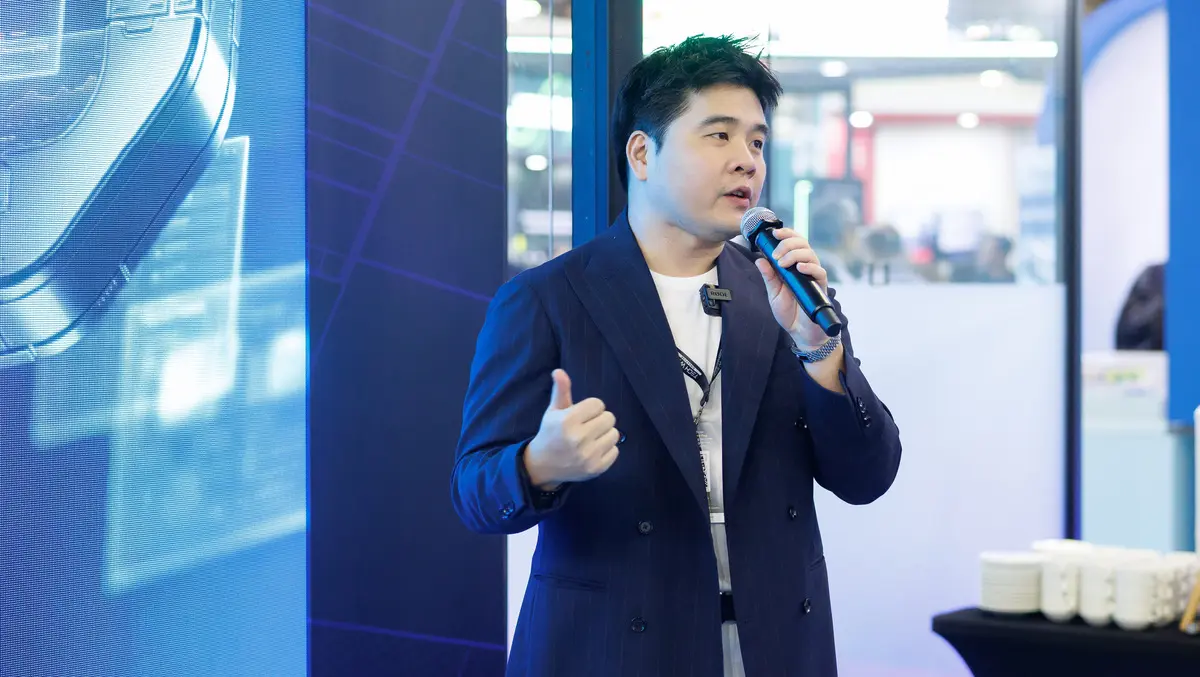
"Our whole team is new to Castrol, but not new to the industry. We've been in the industry for the past 15 to 20 years. We're from IT, data centres, design and projects," said Peter Huang, Global President - Data Centre & Thermal Management, Castrol.
The team includes people with experience at Schneider, Vertiv, Eaton, IBM and ABB, Huang said. CORE brings their infrastructure expertise together with Castrol's manufacturing, supply chain, laboratories and chemists.
Coolant remains the core product, with formulations and concentrations tailored to each project's location and requirements. CORE extends Castrol's role from planning through years of operation. Its customer research found demand for partners able to coordinate multiple cooling technologies and suppliers.
"To us, what makes us different is we go through this as a system approach, not a vendor's approach," added Huang.
System integrators, mechanical contractors, equipment makers and local service providers form part of the delivery network. Partners may handle installation and maintenance when coolant and testing are bundled into a larger mechanical package. Under direct agreements, Castrol's technical staff can collect samples and work on site.
Design role
CORE is intended to bring Castrol into projects at design and specification, then through commissioning, operation and maintenance. Its Asia Pacific design team works with local specialists. Castrol has completed a proof-of-concept programme with an operator in China and is working with global operators on further trials.
"We have to start from the design phase. We have to start from the design consulting phase. After that, we have to go into commissioning. After that, we have got to go into operation, maintenance, and probably disposal or lifecycle service," added Huang.
The entry point varies by project. A direct relationship with a colocation operator can start with land sourcing and feasibility studies, including whether a site can support liquid cooling. An integrator may also bring Castrol into a tender after the design is final. Early involvement gives Castrol greater visibility of future projects and a chance to specify its products, Huang said.
About 70% of Castrol's data centre cooling work involves new builds and 30% existing facilities, Huang estimated. New sites can plan for forthcoming AI hardware from the outset. Retrofitting requires checks on floor loads, pipework, water supply and racks; Huang estimated that 90% of existing sites are not yet ready. Castrol is building an in-house design team to address those constraints.
"Retrofitting takes a lot of design aspects into the project. You have to make sure your floor can take enough weight. You have to make sure your piping is well enough to sustain if you have utility water. You also have to make sure your rack. You have to redesign the rack to fit the high-density servers," added Huang.
Lifecycle service
Coolant generally accounts for about 2% of a data centre's capital expenditure, Huang estimated. It circulates from the primary cooling side through distribution units and pipework to cold plates and microchannels. CORE's services monitor its condition over time.
"We will test the fluid regularly based on preventive maintenance or annual maintenance or quarterly maintenance," added Huang.
The service includes laboratory sampling, portable or in-line sensors, and software that feeds readings into a customer's platform. Huang said propylene glycol and additive concentrations can decline after six months to a year. Maintenance may then require a booster package, cleaning and further sampling. Corrosion, bacterial growth and use of the cooling circuit can affect the fluid's condition, he said.
Castrol's technical staff can perform the work under multiyear direct agreements. Trained partners may do so when a contractor or integrator holds the broader mechanical scope. Local requirements, including fire safety rules, also shape delivery.
Castrol's cooling technology has been tested with chip and hardware manufacturers including NVIDIA and Intel, according to its launch announcement. Huang also named Dell, Lenovo and HPE among the equipment makers considered in validation. Facilities in the UK, US and China, alongside joint laboratories elsewhere in Asia, test fluids, cooling loops and related equipment ahead of wider deployment.
Regional plans
Malaysia, Indonesia and Australia are Castrol's main growth markets in Asia Pacific, Huang said. He cited deployments and proof-of-concept projects in Melbourne, Sydney and Tasmania, and deployments in Malaysia. Indonesian projects were still in planning.
"Singapore is a bit saturated, to be honest with you. Malaysia, Indonesia, Australia: big growth for us. Next we see Thailand. We see India, and then don't forget Japan and Korea," added Huang.
Customers and partners include hyperscale cloud providers, colocation operators, mechanical contractors, GPU-as-a-service businesses, distributors and equipment makers. Castrol holds stock in Malaysia, Singapore, Indonesia, Australia, China, Taiwan, India, the US and the UK to respond to bids and local delivery needs, Huang said.
South Korea is moving somewhat faster than Japan, while Malaysia and Indonesia have the quickest pace of execution among the markets Huang discussed. Deliveries to Indonesian projects are scheduled for November 2026.